
SMT divergence
When correlated pairs disagree, one of them is lying.
SMT divergence
SMT divergence compares two correlated markets (e.g. EURUSD and GBPUSD, or ES and NQ) at the same moment.
Normally they move together. When one makes a new low and the other doesn't (or new high), that disagreement is a divergence.
Why it matters: if one pair can't make a new extreme while the other can, the move is weaker than it looks. It often appears right at liquidity sweeps and can hint that a reversal is coming.
How to use it:
- Only compare genuinely correlated markets
- Look for it at key levels (old highs/lows, PDH/PDL, HTF zones)
- It's a confirmation, not a standalone reason to trade
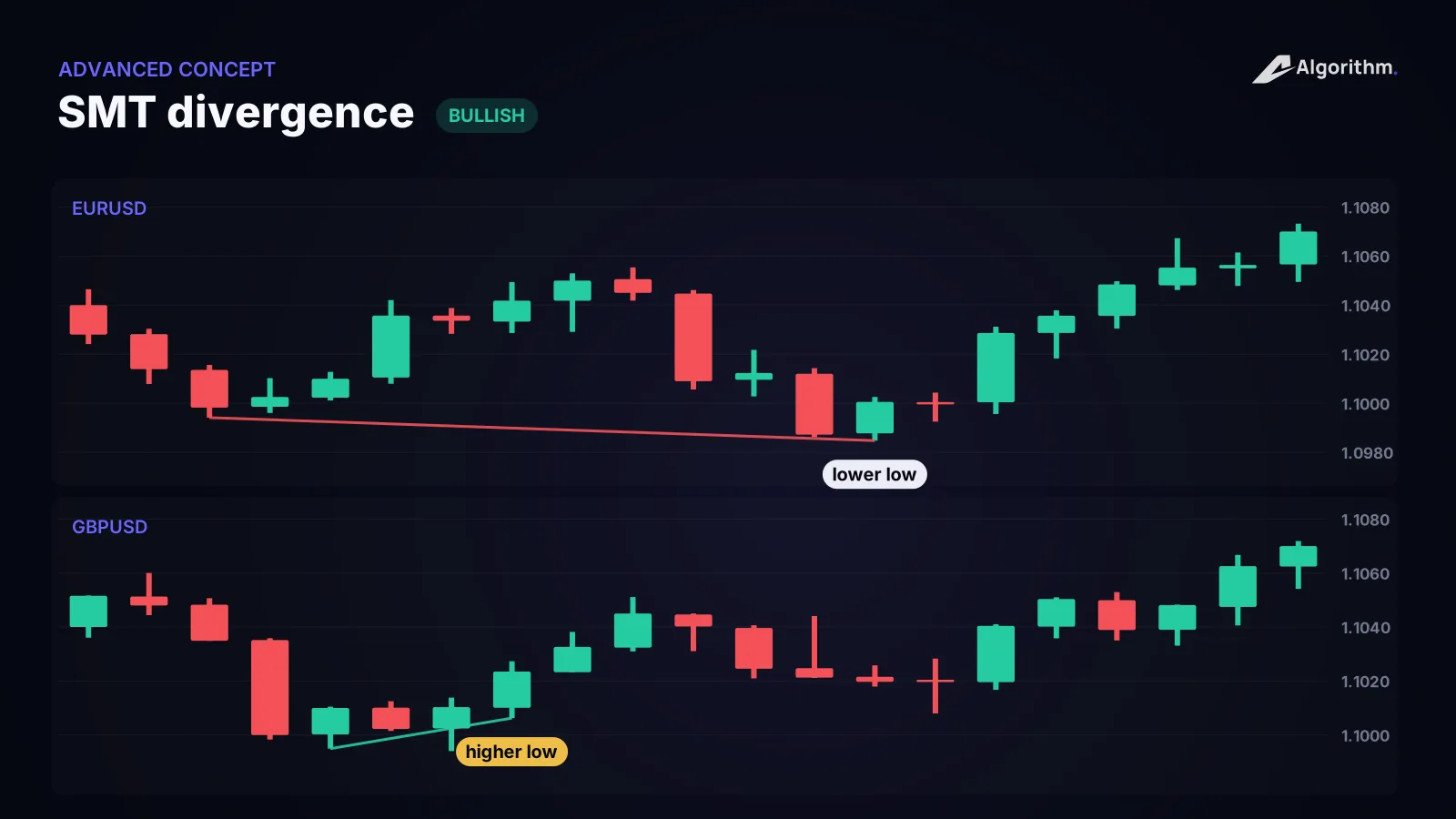
🟢 Bullish SMT
Pair A makes a lower low, pair B makes a higher low.
The sell-off isn't confirmed across both markets → sellers may be running out of steam.
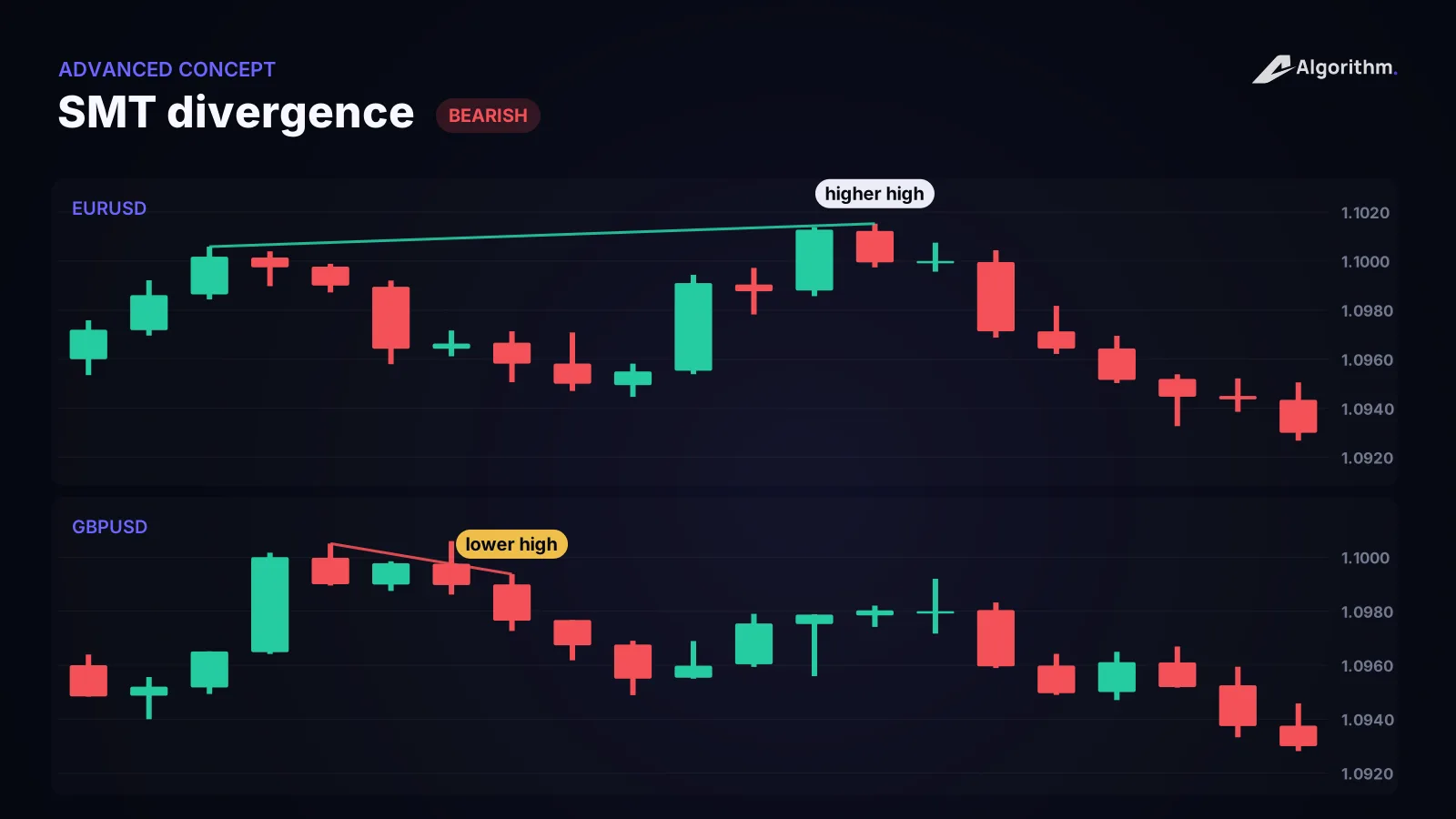
🔴 Bearish SMT
Pair A makes a higher high, pair B makes a lower high.
The rally isn't confirmed across both markets → buyers may be running out of steam.
📋 Quick reference
How to spot it
- Two correlated markets, same timeframe
- Compare the same swing points
- Best at key liquidity levels
When it fails
- Correlation breaks down (news on one currency)
Common mistakes
- Comparing uncorrelated markets
- Using SMT in the middle of nowhere
Related: Liquidity sweep · Market structure shift · Draw on liquidity
Talk it through with the community
Ask questions, share charts, and build your own strategy with other traders.
Join the Discord, free